

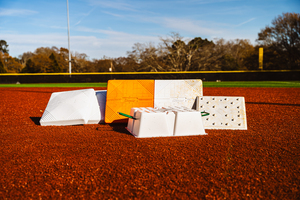
A hard slide into second can change a game, a season, or a player’s confidence in an instant. A BreakAway baseball base system is built for that moment: it releases when a sliding athlete applies force from the wrong direction, allowing the base to move instead of forcing the player’s foot, ankle, knee, or leg to absorb the collision.
For youth leagues, schools, parks departments, and competitive programs, that is not a cosmetic field upgrade. It is a direct safety decision. Players will slide. Bases will be hit from angles no fixed base was designed to tolerate. The question is whether the equipment on the field is prepared to respond.
What Makes a BreakAway Baseball Base System Different?
Conventional bases are designed to stay in place. That sounds logical until a runner’s cleat catches the edge of the base during a feet-first or headfirst slide. When the base does not give, the athlete’s momentum has to go somewhere. Too often, it transfers into the lower body.
Rogers BreakAway Baseball Base system uses a patented release design that allows the base to separate from its mounting point under impact. The base displaces the sliding force while remaining a stable, professional-quality playing surface during normal use. After the play, it can be reset for the next runner.
That distinction matters. A loose, lightweight base can become a hazard of its own, shifting under routine play or creating an unpredictable obstacle. A fixed base may stay put but can increase the risk of a serious contact injury. Rogers BreakAway Bases are engineered to address both concerns: dependable attachment for play, controlled release when impact demands it.
This is why safety bases should not be confused with bright-colored specialty bases or ordinary throw-down equipment. Visibility and convenience have their place, but neither replaces a system designed specifically to release sliding force.
Why Sliding Injuries Are an Equipment Issue
Coaches teach sliding technique for good reason. Athletes need to know when to slide, how to protect their hands, and how to avoid dangerous contact. But even sound technique cannot eliminate every awkward approach, late decision, wet-field condition, or foot-first slide with a trailing leg.
Young players are still learning body control. High school and college players bring more speed and force into the base path. Adult recreational players may slide less often but can be more vulnerable when they do. Every level presents a different exposure, yet the point is the same: instruction alone cannot compensate for equipment that refuses to yield during a direct collision.
More than 40 years of clinical research, field testing, and real-world use have established the purpose behind the BreakAway design. The system was not created as a novelty or a temporary solution. It was developed to reduce the type of base-contact injuries that can occur when an athlete’s momentum meets an immovable bag.
For administrators, this shifts the conversation from reacting to injuries to reducing a known source of risk before the season starts. Field safety is not limited to fencing, padding, and weather policies. The bases are in play on nearly every run-producing or defensive sequence.
Where BreakAway Bases Make the Strongest Case
A safety-base system makes sense anywhere athletes are taught or expected to slide. Youth baseball and softball programs are a natural fit because players are developing fundamental skills and because parents expect leagues to take reasonable precautions with field equipment.
High school athletic departments and parks departments face a broader responsibility. Their fields may host multiple age groups, travel teams, tournaments, camps, and community leagues in a single week. Equipment must handle constant use while giving field crews a repeatable setup process. A durable system that resets quickly helps protect players without creating unnecessary work between games.
College programs and elite training environments also benefit, particularly during high-volume practice periods. Repetition matters in player development, but repeated sliding drills expose athletes to repeated base contact. Coaches should be able to train aggressive, game-ready baserunning without accepting an avoidable equipment risk as part of the process.
There are practical exceptions. A field used only for non-sliding instructional drills may not require the same setup. But if a base path is used for games, live baserunning, or sliding practice, the safety case is difficult to ignore.
Stability During Play, Release on Impact
Some buyers hesitate because they assume a releasing base will feel unstable. That concern is reasonable, especially for field operators who have dealt with poor-quality bases that tilt, wander, or fail prematurely.
The right system is not supposed to release during ordinary foot traffic, routine turns, or normal defensive play. Players need a base that feels secure under the cleat. The release mechanism is designed for an abnormal sliding impact – the kind of force and direction associated with a player catching the base.
This controlled behavior is central to the value of a patented safety-base design. It is not simply about making the base movable. It is about making it responsive when it needs to be and stable when it does not.
Durability matters just as much. Institutional buyers are not purchasing bases for a single showcase weekend. They need equipment that will hold up through practices, tournament schedules, weather changes, field maintenance routines, and repeated resets. A lower upfront price can lose its appeal quickly if bases crack, hardware wears out, or replacements become routine.
Choosing the Right Setup for Your Field
A complete base decision begins with the level of play and the field configuration. Baseball and softball programs may need different base sets, mounting hardware, or distances. Fields with shared use need a plan for storing and reinstalling equipment efficiently. Tournament operators need enough inventory to keep multiple diamonds ready.
First base deserves special attention. A double-first base can help reduce collisions between runners and defensive players by giving each participant a designated portion of the bag. That is a different safety issue from sliding contact, but the two decisions work well together. A field can use a double-first base to manage runner-fielder traffic and BreakAway protection where sliding force is most likely to create injury.
Consider the full field package rather than viewing bases in isolation. Home plates, pitching rubbers, mound equipment, field-maintenance tools, screens, and training mats all influence how consistently a field performs. When each item is selected for the demands of the program, crews spend less time improvising and more time preparing a safe, professional playing environment.
Installation and Field Readiness Still Matter
Even the best base system must be installed and maintained correctly. Ground sleeves should be level, secure, and free of debris. Base paths should be checked before games, especially after heavy rain, dragging, or a weekend of tournament use. Field crews should know how the release-and-reset process works before the first pitch, not after an incident.
Build base checks into the same routine used for mound condition, batter’s boxes, fencing, and line markings. A quick inspection can confirm that bases are seated correctly, hardware is functioning as intended, and the field is ready for players.
Coaches should also explain the system to athletes. The goal is not to encourage reckless slides or replace fundamentals. It is to make clear that the field has been equipped to reduce risk when competitive play produces an unavoidable impact.
Safety That Supports Better Baseball and Softball
Programs are often forced to balance safety goals against budgets, maintenance demands, and the pressure to keep fields available. A BreakAway system addresses that balance with equipment designed for long-term, high-use environments rather than a short-term workaround.
The strongest safety decisions are often the ones athletes barely notice. Players see a firm base, coaches run normal drills, and field managers maintain a reliable setup. But when a runner comes in hard and the base releases as designed, the value becomes clear: the game can continue without asking an athlete’s body to pay for an equipment limitation.
Make base safety part of the standard you set for every diamond. Players bring the effort. Your field equipment should bring the protection.